One template. Every stock.
Choose which metrics render, in what order. Deep value today, compounder tomorrow.
AAPL Apple Inc. · NASDAQ
$189.43
Build a screener. Read each stock on your own terms. Save what you'd come back to.
Most investing tools are built for people who don't want to do the work. They want a score, a signal, a shortcut. We get it. That's a bigger market.
We built Intrinsic for the other kind.
Two of us — a financial analyst and an engineer who read 10-Ks the way other people watch Netflix — kept running into the same wall. The data existed. The frameworks existed. But every tool either buried you in noise or held your hand like you couldn't be trusted with the numbers. We wanted neither.
So we built the thing we actually wanted to use.
Templates, notes, watchlists — configured once, consistent across every stock you open.
Choose which metrics render, in what order. Deep value today, compounder tomorrow.
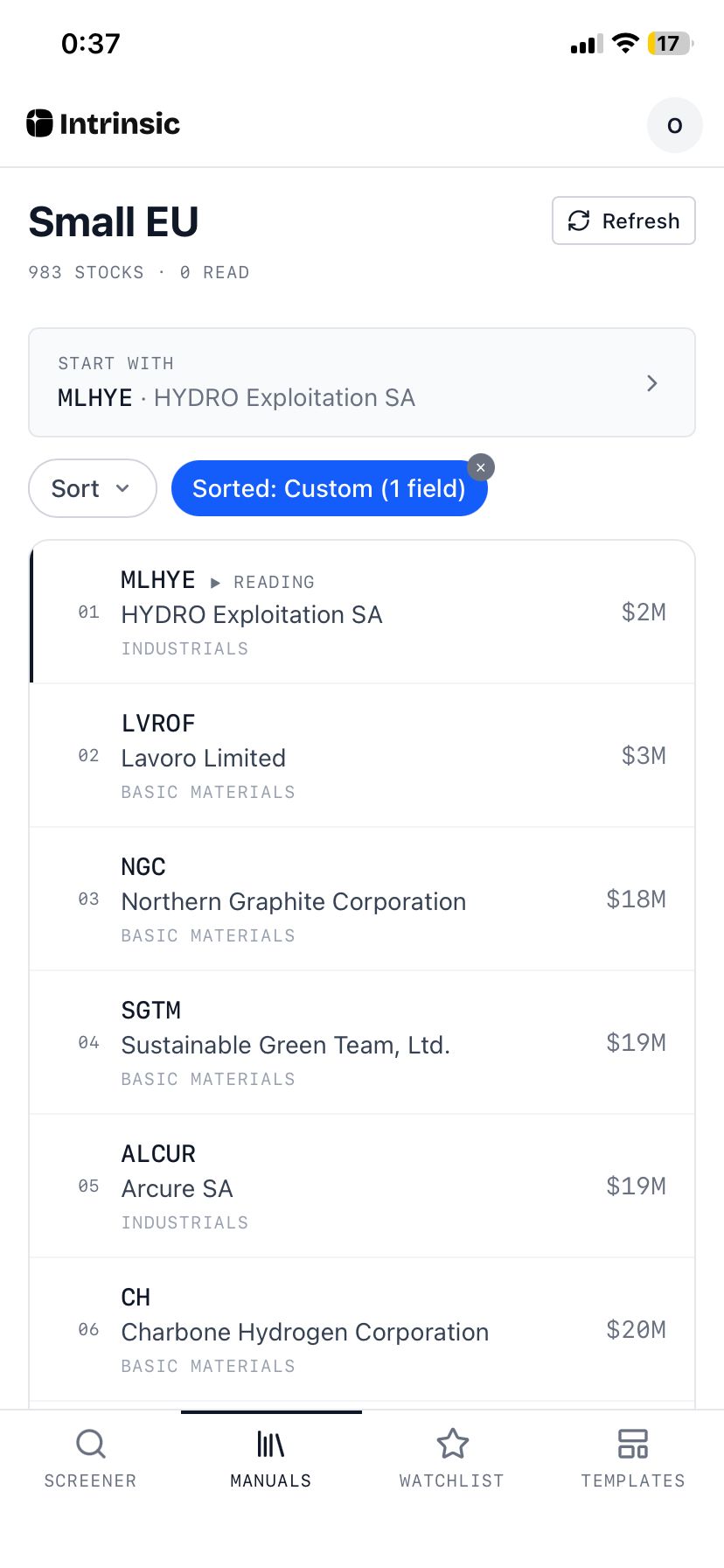
Each manual tracks your progress. Come back to the next name.
Star-rank your names. Tag freely. Share with a link.
Markdown notes, right on the stock page. No separate doc.
Texas Pacific Land holds the rights to ~880,000 acres in the Permian basin. Capital-light by structure: no extraction capex, just royalty receipts.
Royalty model has produced ~25% FCF margins over the cycle. Optionality on Permian volume growth is the asymmetric piece.
Set alerts on price, P/E, yield, or filing date. We flag it when it triggers.
Same template. Same metrics. Side by side.
Intrinsic is mobile friendly — add it to your home screen.
TheThepersonpersonthatthatturnsturnsoveroverthethemostmostrocksrockswinswinsthethegame.game.Andthat’salwaysbeenmyphilosophy.
§ Pricing
The full research environment is free. Paid adds volume and features we're still building — but the screener, manuals, and stock pages are yours either way.
Free forever
Sixty stock pages a month. One saved template. Full screener, every manual, daily data.
Price TBD
Unlimited stock pages, unlimited templates, price alerts — and more we're working on. Waitlist members hear first.
50+ investors on the waitlist